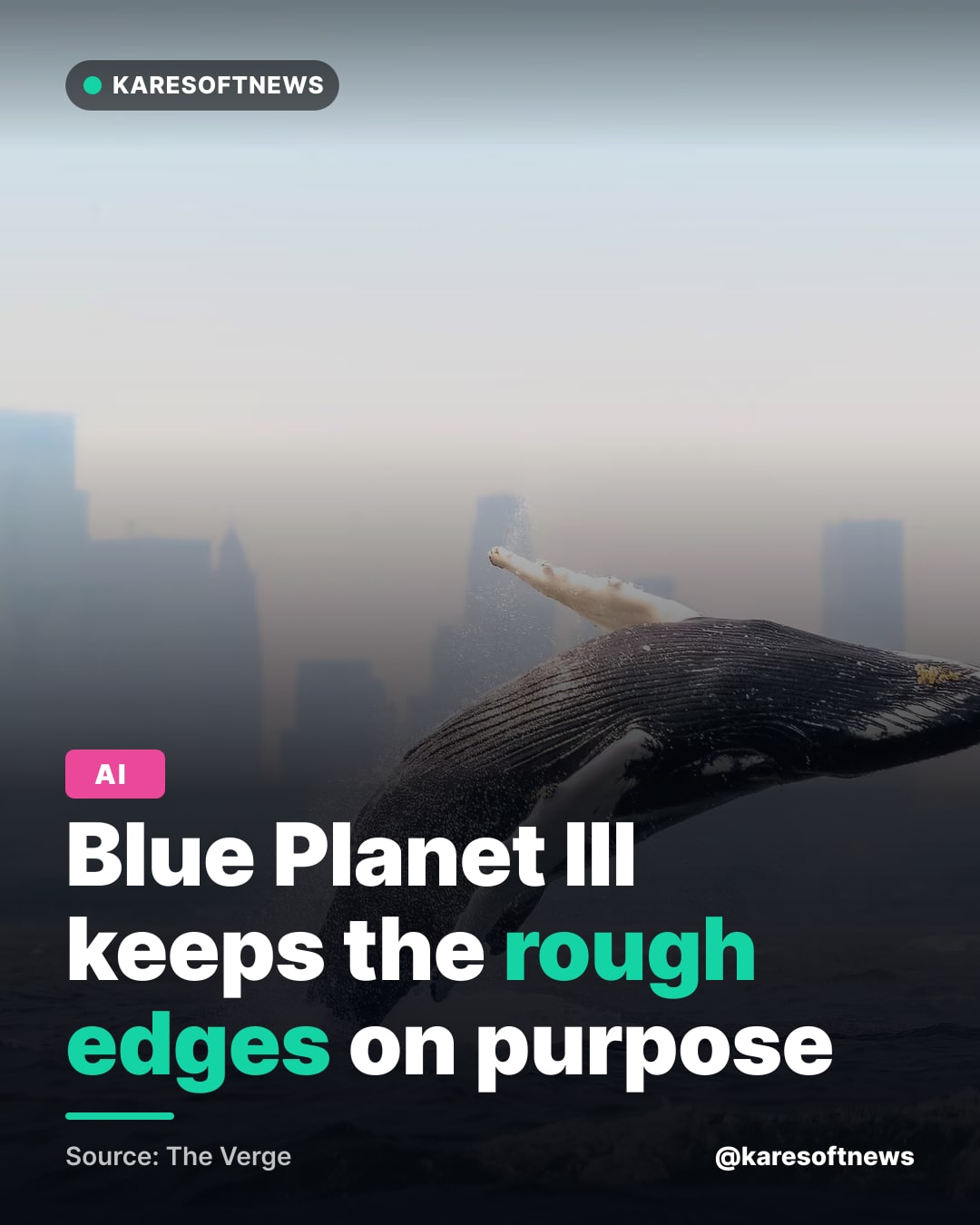
Blue Planet III keeps the rough edges on purpose
An interesting signal from BBC's Blue Planet III. Previous instalments of the nature series were defined by gorgeous, crystal-clear footage that seemed almost too good to be real. Now the production is deliberately keeping the less-than-perfect shots. The reasoning is simple: one of the dead giveaways of AI-generated imagery is that everything looks too polished and seamless. By leaving the rough edges in, the series is positioning its authenticity as a feature rather than a flaw. For anyone working in media, production, or content strategy, this is a useful case study. As synthetic visuals get more convincing, audiences may start to value proof of real-world capture over flawless perfection. Trust could become a creative differentiator, and that has implications for how teams plan, shoot, and label their work.
Key points
- What happened BBC's Blue Planet III is deliberately leaving less-than-perfect shots in the nature series to prove its footage is authentic.
- The key detail Previous Blue Planet seasons were known for gorgeous, crystal-clear footage that seemed almost too good to be real.
- Why it matters As AI makes visuals look flawless, polish can be a giveaway. Imperfection is becoming a sign that footage is real.