Cassini Spots Saturn's Yin-Yang Moon in 1671
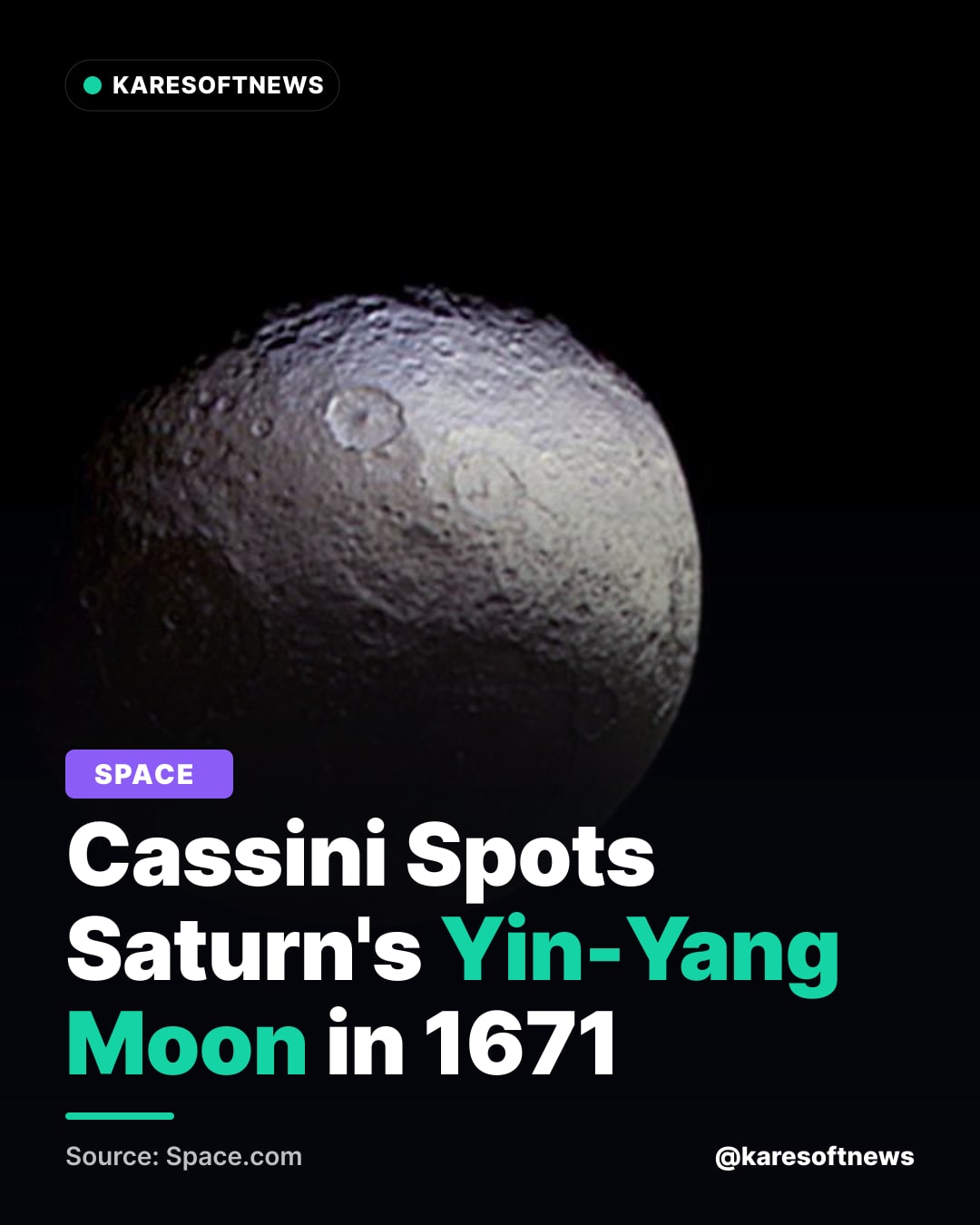
On Oct. 25, 1671, Italian astronomer Giovanni Cassini discovered a new moon at Saturn, later named Iapetus. The moon is widely known as Saturn's 'yin-yang' moon, a nickname that reflects its striking two-tone appearance.
Why does this matter for the tech and science community? Discoveries like this show how careful observation and precise instruments form the foundation of everything that follows. Today's planetary missions, sensors and imaging systems all build on that same principle: look closely, measure carefully, and question what you see.
For professionals working in science, engineering and data analysis, this story is a useful reminder that long-running observation still pays off. Historical discoveries also provide context for how our understanding of the solar system has evolved over centuries.
Key points
- What happened On Oct. 25, 1671, Italian astronomer Giovanni Cassini discovered a new moon at Saturn.
- The key detail The moon is Iapetus, widely known as Saturn's 'yin-yang' moon, a nickname tied to its two-tone look.
- Why it matters Early discoveries like this shaped how we study the solar system, and careful observation still drives space science today.