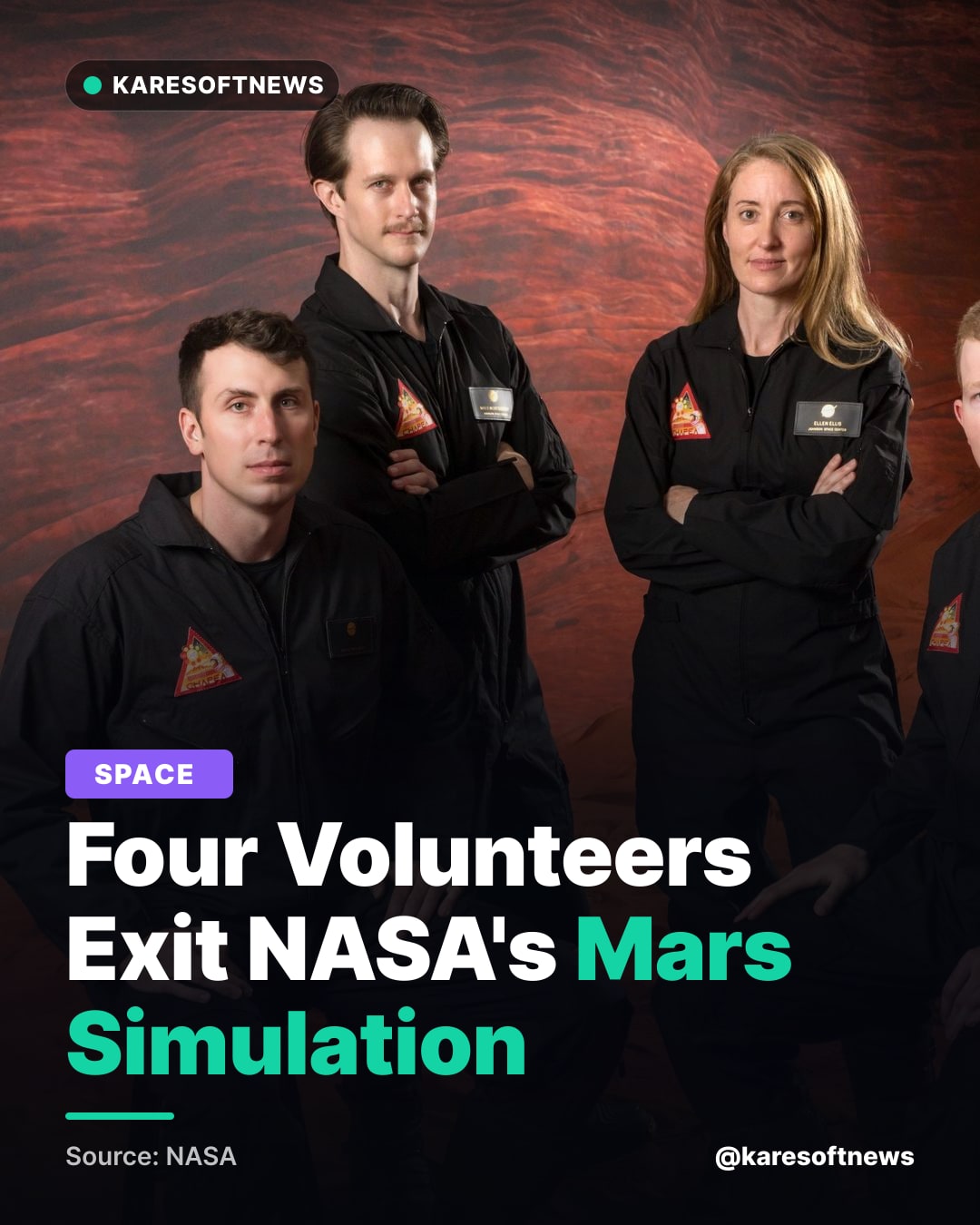
Four Volunteers Exit NASA's Mars Simulation
Four volunteers are set to complete a yearlong simulated Mars mission at NASA's Johnson Space Center in Houston, exiting their habitat on Saturday, Oct. 31, after 378 days of isolation.
For anyone working in aerospace, human factors research like this is where the hard problems get tested. Health and performance data from the simulation can help NASA develop methods that support crews on long-duration missions, where resources, communication and daily routines all carry real weight.
The significance goes beyond space exploration. Teams studying remote operations, team dynamics and workplace wellbeing can learn a lot from how a small group sustains performance under prolonged isolation and confinement.
NASA's decision to invite media to the crew's completion signals how seriously the agency treats this work and the people behind it.
What do you think will matter most for the next generation of long-duration crews?
Key points
- What happened Four volunteers lived and worked in a simulated NASA Mars mission for more than a year. They are set to exit their habitat on Saturday, Oct. 31.
- The key detail The crew completed 378 days of isolation in a facility at NASA's Johnson Space Center in Houston, and NASA invited media to cover the completion.
- Why it matters Health and performance data from the simulation can help NASA develop methods that support crews on future long-duration missions.