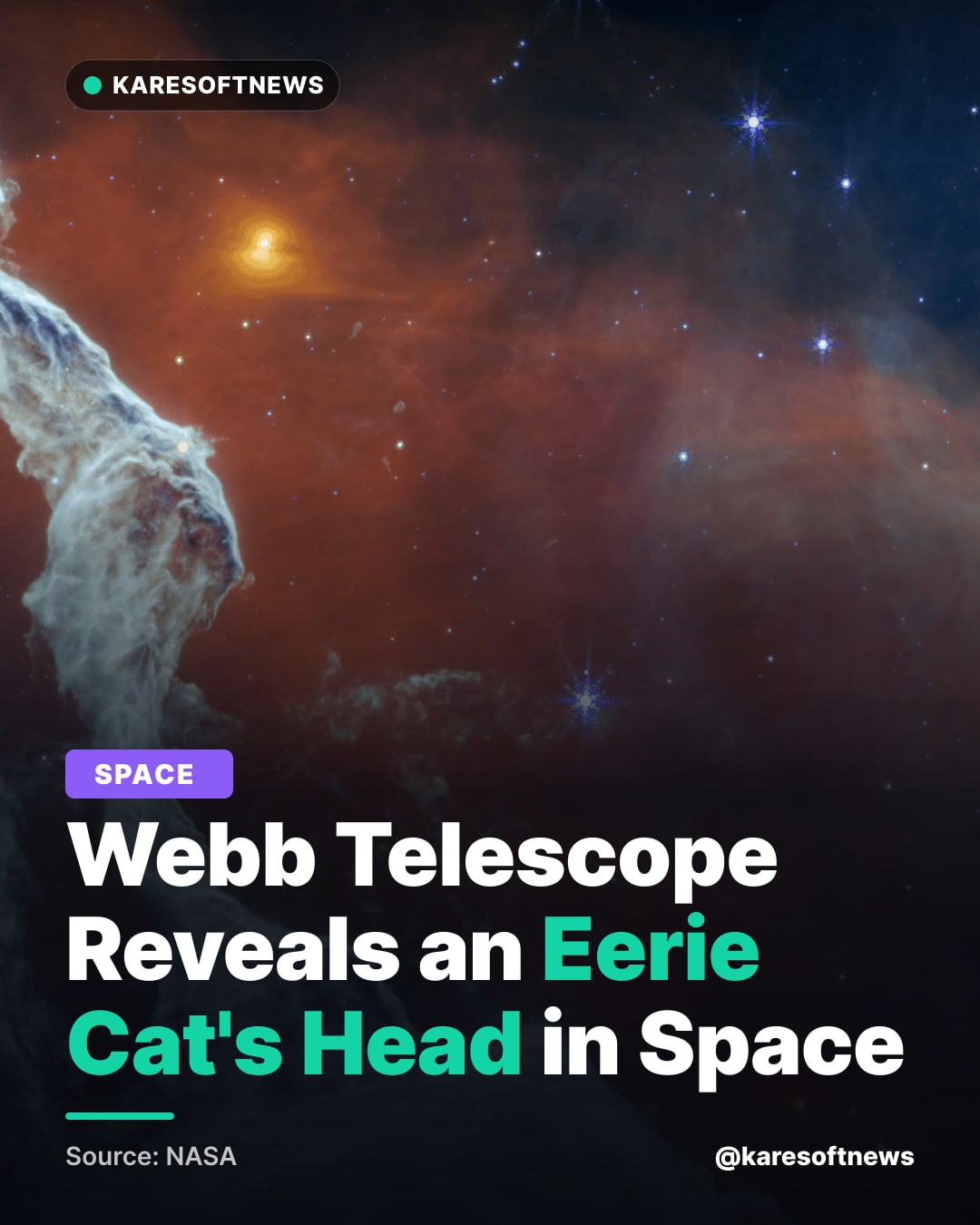
Webb Telescope Reveals an Eerie Cat's Head in Space
NASA has released a mid-infrared image from the James Webb Space Telescope showing intricate structures within the Cat's Head Nebula, published on Oct. 29, 2026. The distinctive shape of the nebula was likely sculpted over time by intense ultraviolet radiation and winds from massive stars in the nearby Carina Nebula. This process, known as stellar feedback, shows how energetic young stars can actively reshape the gas and dust around them. For those working in astronomy, astrophysics, or space technology, images like this matter because they turn complex physical processes into data that researchers can study and explain. It is also a useful reminder for science communicators: strong visuals help audiences grasp invisible forces at work across the cosmos. How do you think high-quality space imagery is shaping the way the public engages with science?
Key points
- What Webb just captured NASA's James Webb Space Telescope has released a mid-infrared view of the Cat's Head Nebula, showing intricate structures within it.
- The key detail The nebula's cat's head shape was likely sculpted over time by intense ultraviolet radiation and winds from massive stars in the Carina Nebula.
- Why it matters The image shows how massive stars can reshape the clouds around them, a process called stellar feedback, and makes that hidden activity visible.