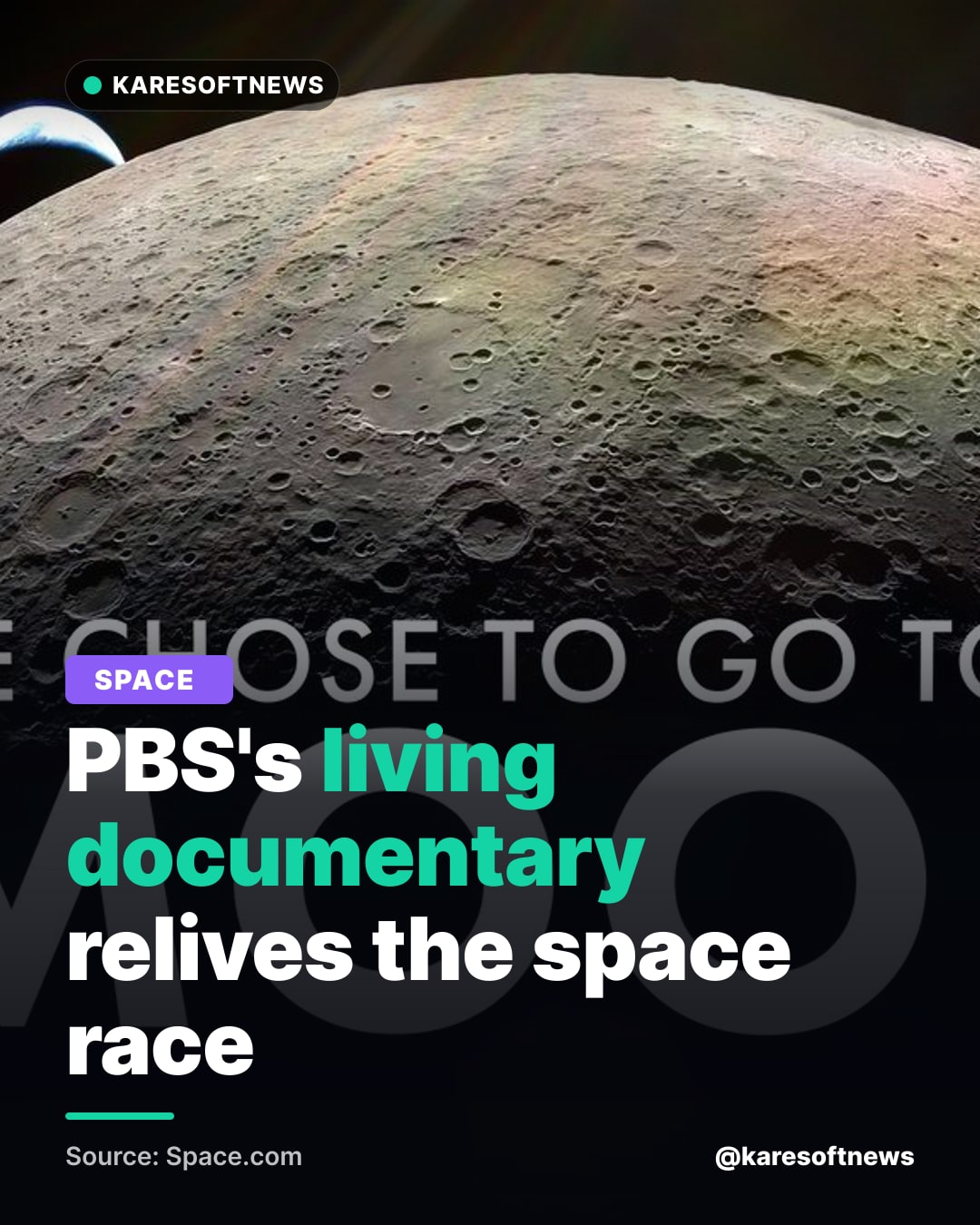
PBS's living documentary relives the space race
Storytelling is one of the most powerful tools in science communication, and PBS's new living documentary, We Chose to Go to the Moon, shows why. Rather than only presenting the space race as a timeline of milestones, the project aims to make it feel immediate and experiential, which is exactly the kind of approach that helps audiences connect with complex history. For those working in aerospace, media, education or science outreach, it's a useful case study in how format shapes understanding. The story also highlights something easy to overlook: the human side of the Apollo program. Neil Armstrong's son and granddaughter singing a tribute to the Apollo 11 astronaut is a reminder that the people behind these missions have families and legacies that continue long after the headlines fade.
Key points
- What happened PBS has released a new living documentary called We Chose to Go to the Moon that explores the space race.
- The key moment Neil Armstrong's son and granddaughter sing a moving tribute to the legendary Apollo 11 astronaut.
- Why it matters It puts a human face on the space race and reminds viewers of the families connected to the Apollo missions.