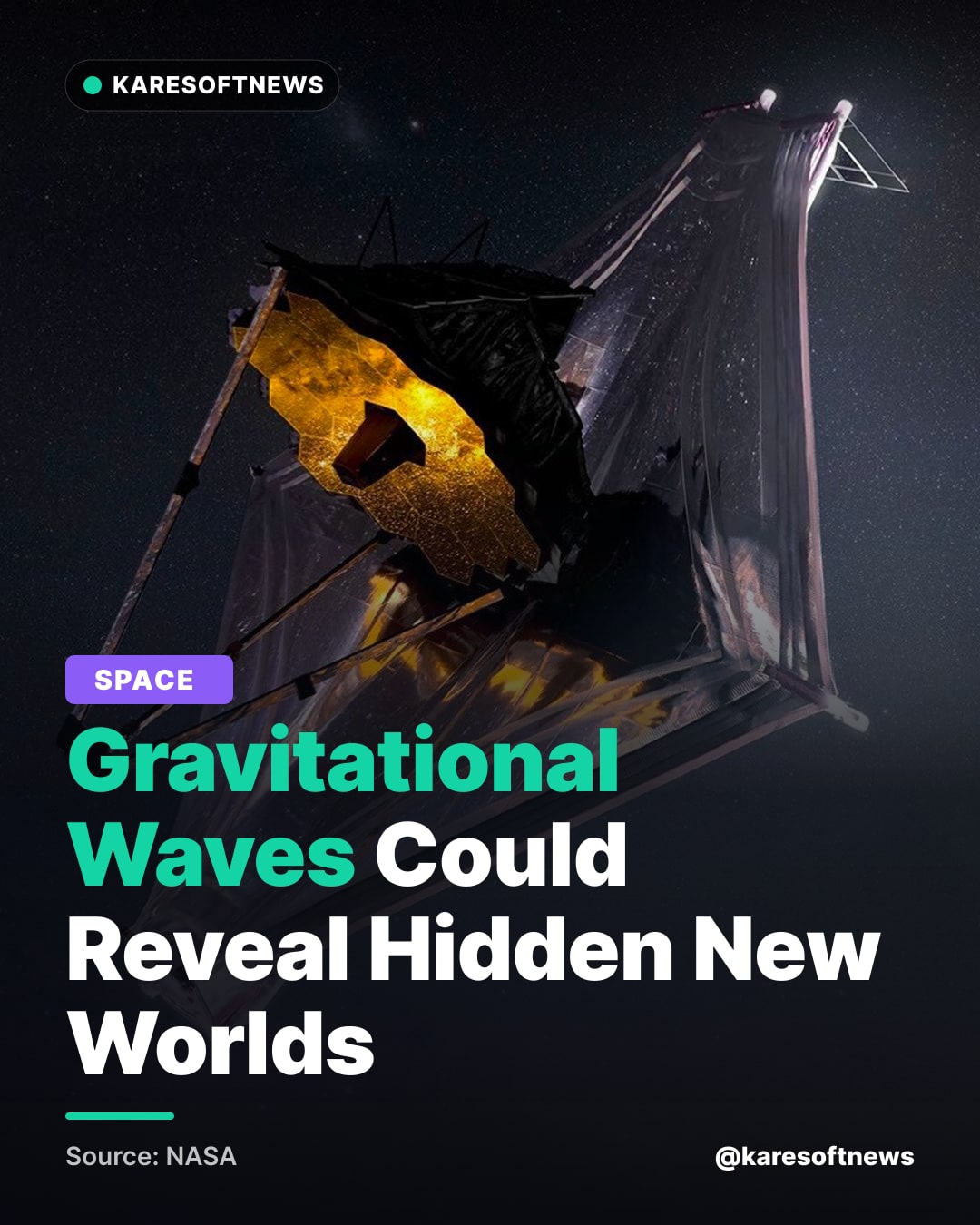
Gravitational Waves Could Reveal Hidden New Worlds
NASA astrophysicists have published two studies showing how the LISA (Laser Interferometer Space Antenna) observatory could reveal a new and unique population of exoplanets throughout our galaxy.
LISA is still in development. Its core task is to detect gravitational waves, the tiny ripples in space-time caused by orbiting masses. The research shifts the conversation from detection alone toward discovery: the same signals engineers are building instruments to capture may also map worlds that conventional methods are poorly suited to find.
For those working in space science, instrumentation, data analysis and mission planning, this is a useful signal. It shows how a future observatory is being justified not just by fundamental physics but by a concrete path to new astronomical findings. Teams that can bridge gravitational-wave data and exoplanet science may find growing demand as LISA moves closer to launch.
Key points
- What happened NASA astrophysicists led two studies showing how LISA could reveal new worlds beyond our solar system.
- The key detail LISA, the Laser Interferometer Space Antenna, is still in development and will detect gravitational waves, tiny ripples in space-time caused by orbiting masses.
- Why it matters The studies suggest LISA could uncover a new and unique population of exoplanets throughout our galaxy.